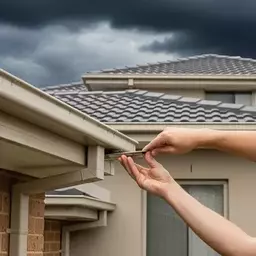
You notice a yellowish stain spreading across your ceiling the morning after a heavy downpour. Your first instinct might be a burst pipe somewhere inside the wall. But for many Melbourne homeowners, the real culprit is sitting on top of the house.
A significant number of leak detection callouts trace back not to internal plumbing failures, but to roof plumbing systems that have deteriorated, blocked, or been poorly installed in the first place.
What Is Roof Plumbing and Why Does It Matter?
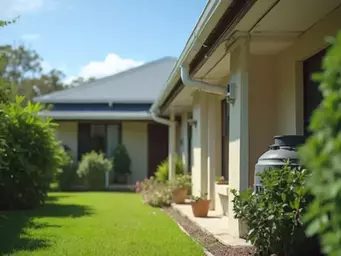
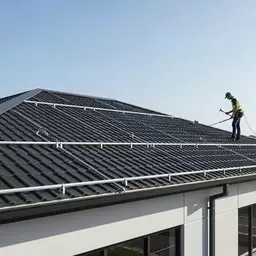
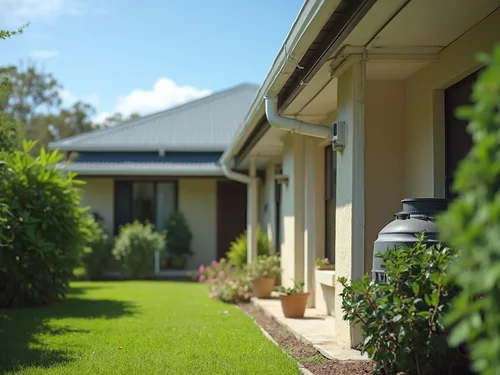
Roof plumbing covers everything involved in collecting and directing rainwater off your roof and away from your home's structure. That includes gutters, downpipes, box gutters, flashings around chimneys and skylights, and the overall roof drainage layout.
When this system works properly, rainwater flows off the roof, into the gutters, through the downpipes, and safely away from the foundation. When it doesn't, water finds its own path, usually through joints, gaps, or porous materials, and into your ceiling cavity or wall frames.
Melbourne's weather makes this especially important. The city is known for sudden, heavy rainfall events that can drop large volumes of water in a short window. A drainage system that handles a light shower without issue can fail under that kind of load. Engaging a professional in roof plumbing Melbourne ensures your drainage system is built and maintained to Victorian standards, including compliance with AS/NZS 3500.3 for stormwater drainage.
Common Roof Plumbing Faults That Cause Leaks
Most roof-related leaks come down to a handful of recurring failures:
-
Blocked or overflowing gutters: Leaf litter, debris, and sediment build up over time. When gutters can't drain fast enough, water backs up under the roof edge and soaks into the fascia or ceiling.
-
Cracked or displaced flashings: Flashings seal the joints where the roof meets vertical surfaces like chimneys, skylights, and parapet walls. Once a flashing lifts, cracks, or pulls away from its mortar bed, water has a direct entry point into the building.
-
Poorly sealed downpipe joints: A loose or corroded joint partway down a downpipe can send water straight into the wall cavity rather than to the stormwater drain.
-
Incorrect roof pitch: If a roof section doesn't have adequate fall, water pools instead of draining. Prolonged pooling accelerates material breakdown and increases the risk of penetration.
-
Corrosion in older metal roofing: Galvanised steel and corrugated iron roofing common in Melbourne's older suburbs eventually corrodes, particularly around penetrations and fixings. Small rust perforations are easy to miss during a visual check.
How Leak Detection Connects to Roof Plumbing
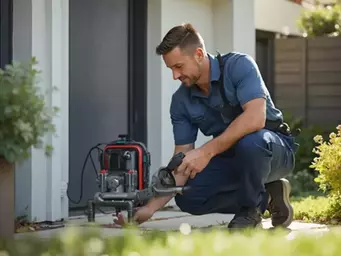
Leak detection specialists use tools like thermal imaging cameras, moisture meters, and tracer gas equipment to locate exactly where water is entering or accumulating, without guesswork. This matters enormously when the source isn't obvious.
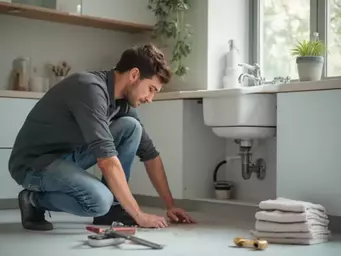
A ceiling stain could point to a cracked flashing three metres up the roofline, a leaking shower on the floor above, or a slow internal pipe failure inside the wall. Each of those requires a completely different repair approach. Treating the wrong source wastes money and leaves the actual problem intact.
Before any walls are opened or floor tiles are lifted, a professional leak detection assessment can confirm whether the source is in the roof drainage system or the internal plumbing. If it points to roof plumbing, that finding gets handed to a licensed roof plumber for targeted repairs rather than exploratory work. The diagnostic cost is almost always far less than the cost of unnecessary excavation or demolition.
When to Call Both a Leak Detector and a Roof Plumber
Certain situations call for both services working together:
-
After a severe storm or an unusually heavy Melbourne rainfall event
-
Before settling on an older property, particularly pre-1980s homes with original guttering or iron roofing
-
When ceiling stains or internal mould appear with no clear internal plumbing cause
-
As part of an annual maintenance inspection, especially heading into autumn and winter
Act Early, Not After the Damage Spreads
Roof plumbing and leak detection are complementary services. One locates the source of the problem with precision; the other repairs the drainage system responsible for it. For Melbourne homeowners, the combination removes the guesswork and protects against the kind of slow, hidden water damage that compounds quietly for months. The sooner both are brought in, the smaller the repair bill tends to be.
Would you like a meta title and meta description written to match this article, or any section adjusted for length or tone?